
Schedule Service
Preventing Algae Bloom During Wet Spring Weather in Houston
Category: Blog
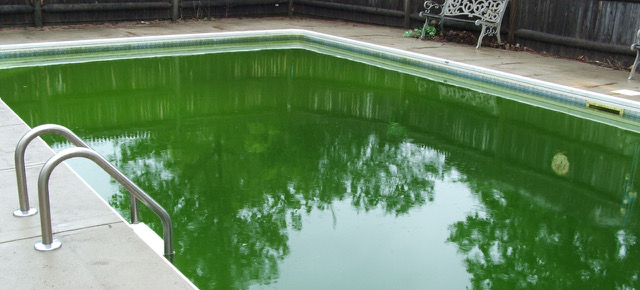
April 17, 2026Spring in Houston is beautiful… until you look out at your pool and see it turning green. If you’ve ever walked outside after a stretch of rainy days and found your crystal-clear water transformed into something resembling a swamp, you know exactly what we’re talking about. Algae blooms are one of the most common (and frustrating) pool problems Houston homeowners face, and the wet spring weather we get every year is like rolling out the welcome mat for them.
At Church Pool Services, we’ve seen it all, from mild green tints to full-blown black algae takeovers that take weeks to clear. The good news? Algae blooms are almost entirely preventable when you know what to watch for and stay ahead of the problem. Here’s what every Houston pool owner needs to know this spring.
Why Does Spring Rainy Weather Trigger Algae Blooms?
To prevent algae, it helps to understand why spring is such a problem in the first place.
Heavy rain dilutes your pool chemicals. Every time it pours, rainwater floods into your pool and dilutes your carefully balanced chemicals. Chlorine levels drop, pH shifts, and the protective barrier keeping algae at bay starts to weaken. A pool that was perfectly balanced on Monday can be a breeding ground by Friday after a week of spring storms.
Warm temperatures accelerate algae growth. Houston doesn’t really have a “cold” spring. Daytime temps in March, April, and May can push well into the 80s, and warm water is exactly what algae blooms needs to multiply fast. A pool that’s ignored can go from clear to green in as little as 24 hours during warm, wet weather.
Runoff brings algae spores into your pool. Rain doesn’t just add water, it washes pollen, dirt, organic debris, and yes, algae spores right into your pool. Your filter has to work overtime, and if it’s not running long enough or cleaned regularly, those spores get a foothold.
Reduced sunlight throws off chemical balancing. Cloudy, overcast days can affect UV exposure, which plays a role in chlorine effectiveness. If you’re using an outdoor chlorinator or relying on sunlight-activated products, a stretch of gray spring weather can create chemical dead zones in your water.
The Three Types of Pool Algae (and What Makes Each Dangerous)
Not all algae is the same. Here’s a quick breakdown of what you might be dealing with:
Green Algae is the most common type and typically the easiest to treat. It floats freely in the water or clings to walls, turning your pool water cloudy and green. Green algae usually signals a chlorine or circulation problem and can often be cleared with shock treatment and brushing if caught early.
Yellow (Mustard) Algae is trickier. It looks like sand or pollen on the walls and floors of your pool, and it’s resistant to normal chlorine levels. Yellow algae tends to hide in shady areas and can come back repeatedly if not treated aggressively. It can also hitch a ride on swimsuits and equipment, reintroducing itself after treatment.
Black Algae is the toughest of all. It’s not really a true algae, it’s a cyanobacteria that roots itself into the plaster or surfaces of your pool and forms a protective outer layer that shields it from chlorine. Black algae appears as dark spots on your pool walls and requires serious, sustained treatment. If your pool has black algae, call a professional. This is not a DIY fix.
7 Steps to Prevent Spring Algae Blooms Before They Start
Prevention is always easier (and cheaper) than treatment. Here’s how to keep algae out of your pool during Houston’s wet spring season.
1. Test and Balance Your Water Weekly (Not Monthly)
During spring, weekly water testing is the minimum. After any significant rainfall, test again. You’re checking:
- Free Chlorine: 2.0–4.0 ppm
- pH: 7.4–7.6
- Total Alkalinity: 80–120 ppm
- Cyanuric Acid (Stabilizer): 30–50 ppm
When these numbers are off, algae has an opening. Keeping them in range closes that door. Your Church Pool Services technician tests these at every visit as part of our multipoint checklist, so if you’re on a weekly service program, this is already handled.
2. Shock Your Pool After Every Heavy Rain
Rain is one of the most common reasons Houston pools turn green. After any significant rainfall, shock your pool with a quality chlorine shock product. This replenishes the chlorine that got diluted and kills any spores that washed in before they can take hold. Don’t wait to see if the water looks okay, by the time it looks off, you’re already dealing with an active bloom.
3. Run Your Pump Longer During Wet, Cloudy Periods
Your pool pump and filter are your first line of defense. A common rule of thumb is to run your pump one hour for every 10°F of water temperature. During a warm Houston spring, that might mean 8–10 hours per day. During extended rainy stretches, bump that up. Stagnant water is where algae thrives. Moving water makes it much harder for algae to gain a foothold.
4. Brush Your Pool Walls and Floor Weekly
Even if your pool looks clean, brushing the walls, steps, and floor every week disrupts algae before it can establish a root system. Pay special attention to shaded areas, corners, behind ladders, and anywhere circulation might be weak. Dislodging algae early keeps it in the water where your filter and chlorine can destroy it.
5. Use an Algaecide as a Preventive Measure
Adding a weekly or bi-weekly dose of a quality algaecide during spring gives you an extra layer of protection, especially for pools with a history of yellow or black algae. A good algaecide won’t replace proper chlorine levels, but it works alongside your other chemicals to create an environment algae really doesn’t want to be in. Ask your technician which product is right for your pool type.
6. Keep Your Filter Clean and Running Efficiently
If your filter is clogged or due for a cleaning, it can’t do its job, and during spring, that’s a big problem. Cartridge filters should be cleaned every 3–6 months and inspected more frequently during heavy use. Sand filters need regular backwashing. DE filters need their grids replaced periodically. If your filter pressure gauge is reading 8–10 psi higher than normal, that’s a sign it needs attention immediately. Church Pool Services handles all filter types.
7. Trim Back Landscaping Around Your Pool
Overhanging trees and shrubs drop organic matter like leaves, pollen, bark, and debris directly into your pool. This organic matter is food for algae and bacteria. Before spring gets into full swing, trim back anything hanging over your pool and make sure your landscaping isn’t directing runoff directly into the water.
What to Do If You Already Have an Algae Bloom Problem
If you’re reading this because your pool is already green, don’t panic. But don’t wait, either. Here’s the general approach:
- Identify the algae type. Green algae, yellow algae, and black algae each require a different treatment approach.
- Adjust your water chemistry first. Algae treatment won’t be effective if your pH and alkalinity are way off. Get those in range before shocking.
- Brush aggressively. Scrub all surfaces to break up algae colonies and expose them to the chlorine in the water.
- Shock heavily. For a full green pool, you will likely need to heavily shock the water.
- Run the filter continuously until the water clears. Clean the filter mid-cycle if pressure builds up.
- Vacuum to waste once algae starts dying. This removes dead algae from the pool rather than recirculating it through your filter.
For yellow or black algae, or any case where standard shock treatment isn’t working, it’s time to call in a professional. The longer you wait, the worse (and more expensive) the problem gets.
Frequently Asked Questions About Pool Algae in Houston
How quickly can a pool turn green in Houston’s spring weather?
Very quickly. A pool with low chlorine and warm, rainy weather can develop visible algae growth in as little as 24 hours. This is why consistent maintenance, especially after rain events, is so important.
Can algae come back after treatment?
Yes, especially yellow and black algae. If algae keeps returning, there’s usually an underlying issue: a water chemistry problem, a circulation dead spot, a failing filter, or spores being reintroduced on equipment or swimwear. A professional can help diagnose recurring algae problems.
Is a green pool safe to swim in?
No. Beyond the obvious — poor visibility is a drowning hazard — an algae-filled pool often harbors bacteria like E. coli that can cause skin irritation, ear infections, and gastrointestinal illness. Don’t let anyone swim in a green pool.
Does shocking my pool every week prevent algae blooms?
Weekly shocking helps, but it’s not a substitute for balanced water chemistry and regular brushing and filtration. Shock is most effective when pH is in range (7.4–7.6). If your chemistry is off, shock won’t work as well.
How much does it cost to fix a green pool in Houston?
A mild green pool might clear up with $30–50 in chemicals if you catch it early. A severe bloom that’s been sitting for days can require multiple shock treatments, filter cleanings, and hours of labor — potentially running several hundred dollars. Prevention is always the better investment.
Let Church Pool Services Keep Your Pool Clear All Spring
Houston’s spring weather isn’t likely to cooperate, but your pool doesn’t have to suffer for it. With consistent maintenance, the right chemicals, and a trustworthy team showing up every week, algae blooms are absolutely preventable.
Church Pool Services has been keeping Houston-area pools clean through the worst of our weather for years. Whether you need weekly service, a one-time green pool cleanup, filter maintenance, or equipment repair, we show up, on time, every time. That’s what sets us apart.
Ready to protect your pool before spring algae season hits? Call us at 713.497.1769 or contact us online for a free evaluation and estimate.